





Unlocking the Golden Path: The Ultimate Guide to Mastering Tunic
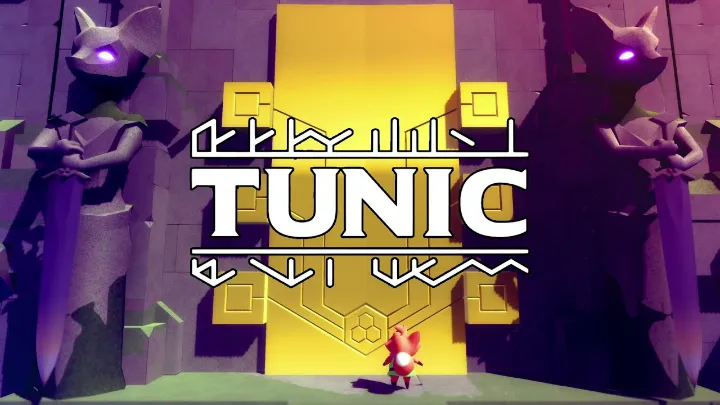
Tunic is a deceptive masterpiece. On the surface, it appears to be a charming, isometric homage to The Legend of Zelda, featuring a cute fox in a green tunic exploring a vibrant world. However, beneath its low-poly aesthetic lies a brutal, Souls-like combat system and a depth of puzzle-solving that rivals games like Fez or The Witness. The game does not hold your hand; in fact, it actively hides its mechanics, map, and story behind a fictional runic language. Being lost and confused is not a bug—it is the intended experience.
To succeed in Tunic, you must change how you approach adventure games. You are not just upgrading stats; you are upgrading your own knowledge. This guide is designed to walk you through the journey from waking up on the beach to unlocking the deepest secrets of the "Golden Path." We will cover combat mastery, the importance of the in-game manual, boss strategies, and the esoteric "Holy Cross" mechanic that changes the entire game. Prepare yourself, little fox; the world is dangerous, but it is filled with wonders for those who look closely.
1. The Mindset of Discovery: Reading the Unreadable
The most unique feature of Tunic is its in-game Instruction Manual. You do not start with a tutorial; instead, you collect pages of a NES-style booklet scattered throughout the world. Most of this manual is written in a glyph-based language that you likely won't understand. Do not let this discourage you. The game is designed so that you can understand the context without reading the text. Pay attention to the illustrations, the maps, and the scribbled notes in the margins. These are your primary guides.
If you find a page, study it immediately. Often, a page found in the early game contains a map for a late-game area or a hint about a mechanic you have been using incorrectly for hours. For example, early pages hint at how stamina works or how to upgrade stats, but the specifics are visual. If you are stuck, the answer is almost always in the pages you have already collected. Press the view button to bring up the manual and zoom in. Treat this book as a holy scripture; it contains the solutions to puzzles that don't even look like puzzles yet.
Key Manual Navigation Tips
- Context Clues: Look for highlighted words or diagrams that link to specific buttons on your controller.
- Map Markers: The manual maps often have small doodles indicating hidden paths or treasure chests.
- Backtracking: If you find a page that references an area you’ve already visited, go back. You likely missed a secret.
2. Combat Fundamentals: Stamina and Evasion
Combat in Tunic is punishing. Unlike traditional adventure games where you can spam the attack button, Tunic relies on a stamina system reminiscent of Dark Souls. Your stamina bar is the green meter in the corner. Every roll, block, and swing consumes energy. If your stamina runs out, you enter a "tired" state where you take extra damage and cannot run or dodge effectively. The golden rule of combat is patience: never empty your stamina bar completely. Always leave enough for one emergency dodge roll.
The dodge roll is your most powerful tool. It provides "invincibility frames" (i-frames), meaning you are immune to damage during the middle of the animation. The trick is to roll into attacks, not away from them. If a boss swings a sword at you, rolling backward often leaves you in the hitbox at the end of the roll. Rolling forward, through the swing, places you behind the enemy, safe and ready to counter-attack.
Advanced Defense Techniques
- The Shield: Once you find the shield, use it, but do not rely on it. Blocking a heavy attack consumes massive stamina. If your stamina breaks while blocking, you will be stunned.
- Parrying: Tapping the block button quickly performs a shield parry. It has a very tight timing window but can stun enemies for a critical hit. It is high risk, high reward.
3. Early Game Progression: The Stick and The Sword
When you first wake up on the beach, you are defenseless. Your first objective is to find a weapon. Head inland until you find the "Stick." It isn't much, but it allows you to break pots and cut small bushes. Do not try to fight the large "Envoy" enemies (the tall guards) yet. They will defeat you in two hits. Your goal is to explore the Overworld and make your way to the "East Forest." The path is linear but filled with lower-tier enemies that serve as good practice for stamina management.
In the East Forest, you will navigate through a series of combat encounters to find the "Hero's Grave." Here, you will obtain the Sword. This changes the game dynamic entirely. The sword allows you to cut down thick grass, opening new paths in the Overworld. Once you have the sword, backtrack to the main shrine in the Overworld. You now have the offensive capability to challenge the Guard Captains and access the locked doors that require a key.

4. Understanding Stat Upgrades and Shrines
Tunic does not have a traditional leveling system where you gain XP from kills. Instead, you level up by offering specific items to the fox shrines (save points). You will find items that look like teeth, flowers, feathers, and potions in chests. These are not just collectibles; they are upgrade materials. However, the game does not explicitly tell you how to use them. You must open the manual near a shrine, which reveals that you need to burn these items along with a small amount of gold currency to increase your stats.
Each item corresponds to a specific attribute. The Jagged Tooth increases your Attack stat. The Fox Flower increases your Health (HP). The Feather increases your Stamina/Potion drinking speed. The Pink Powder/Potion Shard increases the number of healing potions you can carry or their potency. Prioritize finding Potion Shards and Flowers early on. Surviving longer is more valuable than dealing damage in the early game, as learning enemy patterns requires a health buffer.
The Stat Items
- Attack: Jagged Tooth (Increases sword damage).
- Defense: Fox Effigy (Reduces damage taken).
- Potion: Broken Shard (Adds a potion flask).
- HP: Flower (Increases life bar).
- SP: Mushroom (Increases stamina bar).
- MP: Blue Berry (Increases magic points).
5. The Two Bells: The Garden and The Vault
Your primary objective in the first half of the game is to ring two giant bells to open the Sealed Temple. This is a classic adventure trope. The East Bell is located in the East Forest (which you likely rang after getting the sword). The West Bell requires a much more dangerous journey through the "West Garden." Getting there involves navigating the Dark Tomb, a pitch-black area that teaches you to rely on ambient light and enemy eyes to see.
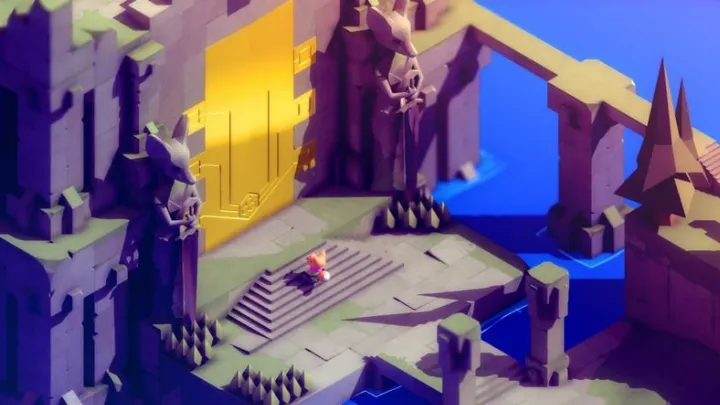
The boss of the West Garden, the Garden Knight, is the first true "wall" for many players. He wields a massive shotgun and a sword. The strategy here is to stay close. His shotgun blast spreads out; the further you are, the harder it is to dodge. If you stay near his legs, you can circle strafe around his swings. Ringing the West Bell is a milestone—it turns the day into twilight and opens the golden doors to the main temple, revealing the next layer of the mystery.
6. Magic Items and Ability Cards
As you progress, you will unlock magical items that use your blue mana bar (MP). The Magic Wand allows for ranged attacks, essential for flying enemies. The Magic Orb acts as a grappling hook, letting you zip to tuning fork-shaped hooks, opening up vertical exploration. Perhaps the most useful is the Magic Dagger (found in the Swamp), which freezes enemies. A frozen enemy takes significantly more damage and is immobile, allowing you to cheese difficult encounters.
You will also find "Ability Cards." You can equip these in your inventory to gain passive buffs. You only have one slot initially, but you can find coins to throw into wells to unlock more slots. Choosing the right cards for the right situation is vital. For exploration, the Scavenger’s Mask prevents health drain from the purple miasma in the Quarry. For bosses, the Orange Peril Ring boosts your attack when your health is critical, allowing for desperate, high-damage comebacks.
7. The Quarry and The Rooted Ziggurat
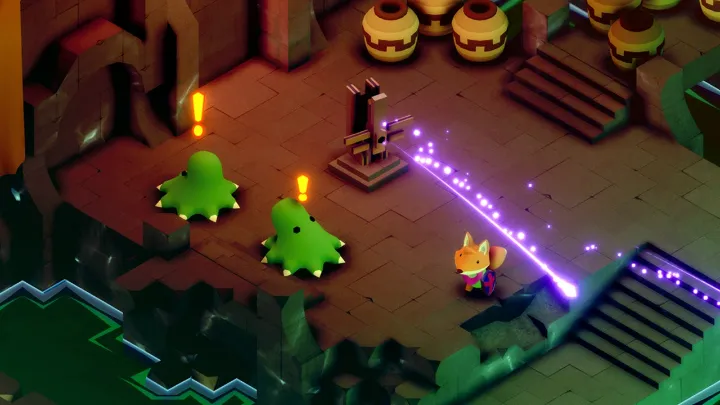
After opening the Sealed Temple, you must seek the three gem keys. One of the most harrowing locations you will visit is "The Quarry." This industrial zone is filled with snipers and a life-draining purple miasma. Do not attempt this area without the Scavenger's Mask ability card (hidden in the Monastery). The miasma reduces your maximum HP until you rest at a shrine, making one-hit kills very likely.
At the bottom of the Quarry lies the "Rooted Ziggurat" and the "Boss Scavenger." This boss fight is a test of your spacing. He fights similarly to you, using a sword, a gun, and bombs. Use the pillars in the room for cover against his bullets. Following this fight, you will descend deeper into the earth, discovering the disturbing truth about the energy powering the world. This section is linear but grueling; ensure your potions are fully upgraded before descending.
8. The "Holy Cross" and The Golden Path
Spoiler Warning: This section discusses the game's core puzzle mechanic. Around the mid-to-late game, you will realize that the D-pad on your controller is not just for using items. The "Holy Cross" mentioned in the manual refers to the D-pad (shaped like a cross). Throughout the world, you will see patterns of lines on walls, doors, floors, and even in the manual itself. These are input codes. If you stand in front of a door with a line pattern and tap the D-pad in the direction the lines flow, the door will open.
This realization recontextualizes the entire game. You aren't just an adventurer; you are a decoder. You must revisit every area to look for these patterns. Some unlock secret chests; others unlock "Fairies" (collectibles needed for the true ending). The most important puzzle is the "Golden Path." Page 49 of the manual shows a grid of numbers. These numbers correspond to other pages in the manual. You must find the line fragments on every page, assemble them into one massive code, and input it at the Mountain Door.
How to Read the Lines
- The Start: Look for a diamond or a solid dot; this indicates where the pattern begins.
- The Path: Follow the line. If it goes up, press Up. If it goes Right, press Right.
- The Breaks: Small perpendicular lines across the path usually indicate you need to press that direction twice or stop.
9. The Heir and The Endings
Eventually, you will face "The Heir," the final boss waiting in the prison dimension. This is a multi-stage fight that is incredibly difficult. The Heir moves faster than any other enemy, has a gap-closing thrust, and can use magic waves that cover the entire arena. You have two options here. If you fight and defeat The Heir, you will trigger the "Bad" (or Loop) ending. You become the new Heir, trapped in the cycle, waiting for the next adventurer to kill you.
However, if you have solved the Golden Path puzzle, collected all the manual pages, and uncovered the true story, you do not need to fight. When you enter the boss arena with the completed manual, you can choose to "Share" your knowledge with The Heir. This triggers the "Good" ending. It breaks the cycle of violence and reveals the emotional core of the story. It is highly recommended to attempt the fight first for the challenge, then reload your save to finish the Golden Path puzzles for the true conclusion.
10. Secrets, Fairies, and The Second Quest
Even after the credits roll, Tunic is not over. There are 20 secret Fairies hidden behind complex Holy Cross puzzles. Finding all of them rewards you with a secret treasure that unlocks a playful "Secret Message" room. Furthermore, there are 12 hidden treasures that require deciphering the most obscure clues in the manual—some involving translating the fictional language or understanding audio cues.
For the masochists, there is "New Game+." In this mode, enemies are harder, but you keep your equipment. There is also a "Golden Obelisk" in the Overworld that allows you to activate "Gun Mode" or other bizarre modifiers if you know the codes. The community has even discovered a "Rosetta Stone" within the game to translate the language fully. Tunic is a game that keeps giving as long as you keep being curious. The more you understand the world, the more the world opens up to you.
Conclusion
Tunic is a rare gem that trusts the player's intelligence. It revives the childhood feeling of flipping through a game manual, wondering what secrets the grainy screenshots hold. By mastering the stamina-based combat, diligently collecting and studying the manual pages, and opening your mind to the "Holy Cross" perspective, you can conquer this beautiful, hostile world. Whether you choose to fight for dominance or puzzle your way to peace, the journey of the little fox is one of the most rewarding experiences in modern gaming. Keep your eyes open, take notes, and remember: the greatest weapon you have is your own curiosity.
Explore a mysterious land in Tunic. Master souls-like combat, decipher the manual, solve the Holy Cross puzzles, and walk the Golden Path to uncover the truth.